
Mono Hot Springs in California: Northern High Sierra Natural Mineral Hot Springs Resort
Experience Profound Relaxation
Family & Pet Friendly Seasonal High Sierra Resort
Reservations Taken Year-Round by Phone
No Emails or Texts


Northern California High Sierra Natural Mineral Hot Springs Resort
Mono Hot Springs Resort is about as remote as you can reach by automobile in California’s Sierra Nevada. Located between Yosemite and Kings Canyon on the west slope of the Sierra, the resort sits along the South Fork of the San Joaquin River, surrounded by granite peaks, pine trees, mountain air, and natural mineral hot springs. Within the wider world of hot springs in California, which ranges from developed wellness resorts to wild backcountry soaks, Mono stands out as a rustic natural mineral hot springs resort in the Northern California High Sierra.
Long before roads reached this part of the Sierra, local Mono Indians knew of the springs, and their history remains part of the story of Mono Hot Springs today. For travelers, nature lovers, and anyone looking for a quiet mountain retreat, this guide covers where Mono Hot Springs is, how to get there, when to visit, what the different soaking pools are like, where to stay, what health benefits and safety tips to keep in mind, and what nearby attractions and common visitor questions to know before you go.
Whether you’re coming for a day soak, a rustic cabin stay, a camping trip, or a longer mountain retreat, Mono Hot Springs is a rare High Sierra getaway where you can slow down, soak, and enjoy the quiet beauty of the mountains. To check current availability or make a reservation, call Mono Hot Springs Resort directly. Reservations are taken year-round by phone.
Getting to Mono Hot Springs in the Sierra “Range of Light”— Not the Mono Basin at Mono Lake
The route to Mono Hot Springs takes you into the Mono Hot Springs in the Central Sierra, known as the “Range of Light” of the western Sierra Nevada, not to be confused with Mono Lake on the east side of the Sierra. To get here from Fresno, you’ll travel over 9,100-foot Kaiser Pass Road, with views of the “Range of Light” and some of the most beautiful light-colored granite in the Sierra Nevada.
After about nine miles of paved road, much of it narrow and one lane, turn onto the well-marked Edison Lake Road. From there, the road drops down and crosses the San Joaquin River, with the turnoff to Mono Hot Springs Resort just past the bridge.
Before heading over Kaiser Pass, fill up with gas at Shaver Lake or Huntington Lake. No gas is sold at Mono Hot Springs or anywhere past Huntington Lake, and services are limited once you continue toward the resort.

When to Visit Mono Hot Springs
Mono Hot Springs is a seasonal High Sierra destination, typically open from late spring through fall, depending on snow, road access, weather, and mountain conditions. Because the resort is reached by Kaiser Pass Road, opening and closing dates can vary from year to year.
Summer is the easiest time to visit, with the warmest weather and the best access to the resort, river, lakes, trails, and natural mineral pools. Early and late season visits can be quieter, but visitors should always check current road and resort conditions before making the drive.
Ways to Access the Hot Springs
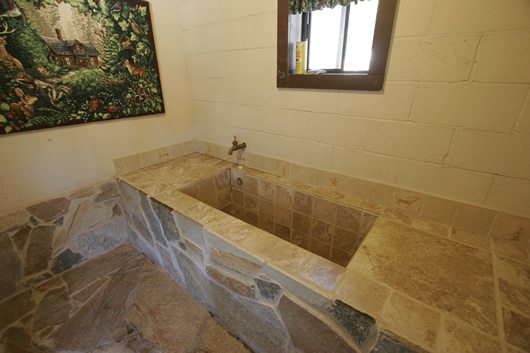
If you’re staying at Mono Hot Springs Resort, you can walk from your cabin or campsite toward the river and nearby natural hot springs. Cabin guests also receive free use of the hot springs spa and bathhouse, giving overnight visitors another easy way to enjoy the mineral water close to the resort.
Day-use visitors can park in the day-use parking area, then walk through the campground toward the river. If it’s your first visit, stop by the General Store for directions or ask for a facility map before heading out. Weekends can be busier, so quieter visits are often easier midweek or earlier or later in the season.
One common route is to walk from the day-use parking area through the campground toward the river, cross to the south side, and hike up toward Old Pedro and the nearby pools. Other springs may be reached from different paths or trailheads, depending on where you start.
Use caution around the river and pools, especially during snowmelt or wet conditions. Rocks, mud, concrete, granite, and river crossings can be slippery. Wear shoes with good traction, move slowly, bring drinking water, and keep a close eye on children.
Healthful Hot Mineral Baths
The Mono Indians first brought white men to the Hot Springs by horseback. Many were cured of their ills, so today Mono hot Springs are famous for their healing effects on arthritis, rheumatism and many other ailments.
The outdoor mineral spa is complemented by a spectacular view of 12,000 ft. Mt. Hooper.
Massages are available for 1/2 hour or 1 hour periods at reasonable rates.

Mono Hot Springs Bathhouse Rates
(Private Room Baths, Showers & Outdoor Spa)
Important Notice
- Babies with parent 2 or under are free
- No dogs allowed around bathhouse facilities
- No alcohol or smoking
- No nudity in spa
- Hours: 8:00 Am to 9:00 PM until September 15
- Other time periods announced in general store
- Towel rental 1.50
One Day All Day Anytime
Use of all facilities
| Adult | $20.00 |
| Children 11 or under | $10.00 |
| Registered campers: | 50% discount |
| Resort Cabin Guest: | no charge |
Campers: Anytime Family Weekly Pass Rates (7 days)
3 or more days are prorated based on weekly rates)
| Family of 2 | $85.00 |
| Family of 3 | $105.00 |
| Family of 4 | $125.00 |
| Family of 5 | $145.00 |
| Family of 6 | $160.00 |
One time showers use for anyone
Cabin guests free
| Adult | $7.00 |
| Children 11 or under | $3.50 |
Guide to the Natural Mineral Pools at Mono Hot Springs
After you reach the river area, you’ll find that the pools at Mono Hot Springs aren’t all the same. Some are hotter, some are cooler, some are easier to reach, and some feel more adventurous. The pools are part of a natural geothermal spring system, with mineral-rich water rising from below the earth’s surface. California is home to incredible geothermal activity, and that broad pattern helps explain why travelers to California hot springs experience so much variety from one region to another; in the Sierra Nevada, the geology allows water to seep deep underground, where it becomes hot water before rising through cracks as it gets lighter and feeding the springs in different ways.
Be careful when stepping into any pool, since temperatures can vary from one spot to another. Test the water slowly before getting all the way in, respect other visitors’ privacy, keep noise levels down, and pack out anything you bring with you.
Here are a few of the main pools and soaking areas you’ll find around Mono Hot Springs.

Old Pedro
Old Pedro is one of the most well-known hot springs at Mono and one of the hottest. The water often averages around 106–107°F, with daily variation, so it’s best enjoyed in shorter soaks.
The two cement-lined pools are remnants of the 1934 bathhouse built by the Civilian Conservation Corps. The original bathhouse buildings are gone, but the historic concrete-walled pools are still part of the experience today.
Because Old Pedro is so warm, it’s more of an in-and-out pool than a place to stay for a long soak. Most visitors cool down after ten or fifteen minutes, then return when they’re ready. The pool is especially pleasant in the afternoon shade, with views up and down the San Joaquin River.

Reed Pools
From Old Pedro, continue uphill about 100 yards to reach the Reed Pools. These cement-lined pools are part of the same historic hot springs area, but they are usually cooler than Old Pedro, which can make them more comfortable on warmer days.
You’ll also see an old circular cement water tank nearby. Depending on the flow, the small tub below may be filled with warm mineral water from a pipe near the tank. The mineral water from this area is also piped across the river to the resort spa, giving guests another way to enjoy the hot springs.
Routes to Iodine Springs and Little Eden
From the Old Pedro and Reed Pools area, you can keep exploring toward several nearby hot springs. To reach Iodine Springs, walk east through the meadow for about 300 yards. This area can be muddy, but stepping stones may help you cross some of the wetter spots.
Little Eden can also be reached from above Old Pedro, but this route is steeper and more strenuous. Many visitors find it easier to reach Little Eden another way: return across the river, drive back out to Edison Lake Road, cross the bridge over the San Joaquin River, and park at the trailhead on the south side of the bridge.

Rock Garden
From the parking area, follow the path west along the river for about 100 yards. When you see water crossing the footpath, look uphill to your left toward the source. You’ll see a large granite outcropping with Rock Garden tucked beside it.
Rock Garden is one of the warmer hot springs, usually around 104°F near the spot where the spring water rises into the pool. It’s large enough for several people and has a beautiful natural setting, with maidenhair ferns growing above the water.

Mud Baths
From Rock Garden, follow the water uphill over the rocks for another 30 yards to reach the Mud Baths. This cooler pool has wide 180-degree views from sunrise to sunset, with the river flowing through the granite outcroppings below.
The soft clay lining the pool is also part of the experience and is often used as a natural facial. Because the surrounding rocks can be slippery, take your time getting in and out.

Iodine Pools
From the area where you climbed up to Rock Garden and the Mud Baths, continue about 140 yards farther down the path to reach the Iodine Pools.
These cement-lined tubs are deep enough to stand in and usually cool enough for a longer soak. Even in cooler hot springs, though, you can lose more water than you realize, so bring plenty of drinking water and stay hydrated.

Little Eden
Little Eden is one of the most scenic and surprising pools at Mono Hot Springs. It’s large enough to swim in and sits high on a ridge, with incredible views of the surrounding basin.
The easiest way to reach Little Eden is usually to return to the bridge over the San Joaquin River, drive about one mile up Edison Lake Road, cross the small grated bridge, and park in the recessed area above the bridge. From there, walk out onto the rocks below the road and look back toward the resort.
On hot days, Little Eden can be especially enjoyable because it’s often closer to swimming-pool temperature than the hotter soaking pools. From the area around Little Eden, you can take in views toward the Range of Light, Bear Dome, Devil’s Table, and the granite features that make this part of the Sierra so memorable.

Rose Garden
Near Little Eden is Rose Garden, a smaller and cooler pool where visitors can usually soak longer without needing to get in and out as often. It’s a good choice when the weather is warm or when you want a gentler soak after visiting one of the hotter pools.
A Little History of Mono Hot Springs
Mono Hot Springs has been drawing visitors for generations. Long before roads reached this part of the Sierra, local Mono Indians knew of the springs, and later helped guide settlers and travelers to the warm mineral waters by horseback and mule.
Over time, the springs became known as a place where visitors came to soak, rest, and seek relief from sore muscles, stiff joints, and the aches and discomforts of mountain travel. That old reputation is still part of the character of Mono Hot Springs today, where the warm mineral water, quiet setting, and High Sierra views continue to make the resort feel restorative.
The area became easier to reach after Kaiser Pass Road opened to the public in the 1920s. In 1934, the Civilian Conservation Corps built a bathhouse and several concrete-walled springs on the south side of the San Joaquin River. Some of those historic pools, including the Old Pedro area, are still part of the experience today.
The resort itself began soon after, when Walter Hill started building Mono Hot Springs Resort in 1935. Over time, the cabins, general store, café, and bathhouse helped turn this remote hot springs area into the rustic retreat visitors still come back to today.

Helpful Tips for Visiting the Springs
If you’re staying at Mono Hot Springs Resort, you can walk from your cabin or campsite toward the river and nearby natural hot springs. Cabin guests also receive free use of the hot springs spa and bathhouse, giving overnight visitors another easy way to enjoy the mineral water close to the resort.
Day-use visitors can park in the day-use parking area, then walk through the campground toward the river. If it’s your first visit, stop by the General Store for directions or ask for a facility map before heading out. Weekends can be busier, so quieter visits are often easier midweek or earlier or later in the season.
One common route is to walk from the day-use parking area through the campground toward the river, cross to the south side, and hike up toward Old Pedro and the nearby pools. Other springs may be reached from different paths or trailheads, depending on where you start.
Use caution around the river and pools, especially during snowmelt or wet conditions. Rocks, mud, concrete, granite, and river crossings can be slippery. Wear shoes with good traction, move slowly, bring drinking water, and keep a close eye on children.
Natural Mineral Content of Northern California’s
| Mono Hot Springs Resort | Parts Per Million |
|---|---|
| Carbonates (CO) | Nil |
| Bicarbonates (HCO) | 305.0 |
| Clorides (CL) | 378.0 |
| Sulphates (SO) | 72.4 |
| Silca (SO) | 4.6 |
| Iron and Alumina (RO) | Trace |
| Phosphoric Acid (PO) | 1.1 |
| Potash (KO) | 11.2 |
| Boron (B) | 1.1 |
| Calcium (CA) | 77.2 |
| Magnesium (Mg) | 5.0 |
| Sodium (NA) | 305.5 |
| Arsenic (As) | 0.16 |
| Manganese (Mn) | Trace |
| Strontium (Sn) | Trace |
| Sarium (Ba) | Trace |
| Copper (Cu) | Trace |
| Lead (Pb) | Trace |
Northern California High Sierra Natural Mineral Hot Springs Resort
What Makes the Hot Springs Geothermal?
Mono Hot Springs is part of a natural geothermal area, where water is warmed underground before rising back toward the surface. As the water moves through the rock, it picks up minerals and feeds the warm springs found throughout the area.
That natural process is what gives Mono Hot Springs its mineral water, warm pools, and unusual geothermal features, including nearby Doris Lake.
Visitors sometimes ask whether drought conditions affect the springs. According to a hydrologist who studied Mono Hot Springs, the water flowing from Old Pedro may have fallen as snow around 2,000 years ago. Because that water has been moving underground for so long, recent seasonal changes in rainfall haven’t had a noticeable effect on the spring’s flow.
Nearby Adventure: Doris Lake
Doris Lake is another local wonder, located about a mile north of the resort. This geothermally warmed lake doesn’t freeze in winter, and on the surface, a shallow layer of warm water can form above the colder water below.
To reach Doris Lake, follow the signs from the General Store and take the trail through the meadow just west of the cabins. It’s a moderate one-mile climb, and the trail comes out near the south side of the lake. Near the reeds, you may see bubbles from the hot springs rising to the surface. You may also see harmless garter snakes along the shoreline.

Stay at Mono Hot Springs Resort
Whether you’re visiting for the day or staying overnight, Mono Hot Springs is a memorable place to slow down, soak, and enjoy the High Sierra. Staying at the resort gives you more time to explore the natural mineral pools, nearby lakes, river trails, and surrounding granite peaks at an easier pace.
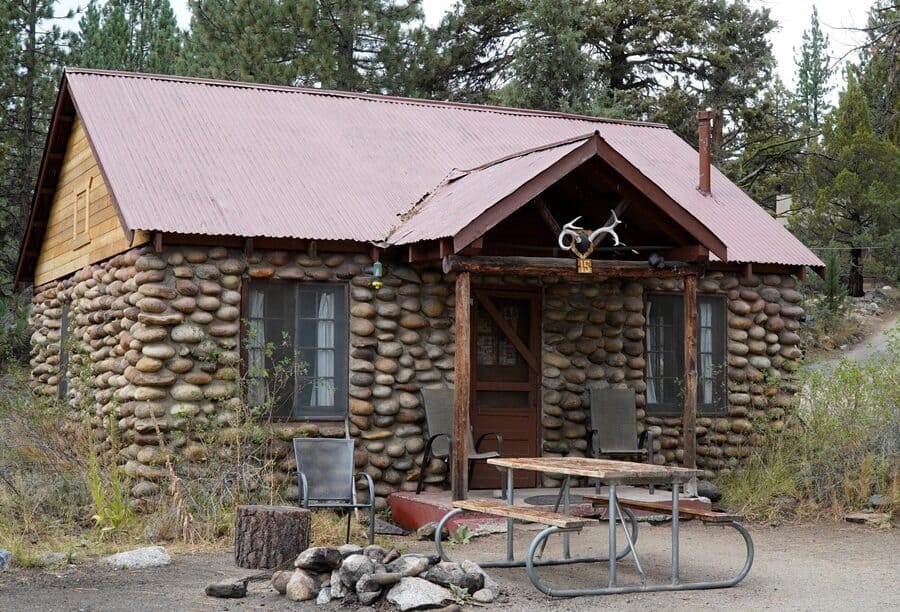
Mono Hot Springs Resort gives you a rustic mountain basecamp close to the springs, with accommodation options that include historic cabins and rustic cabins, tent cabins, campground access, the General Store, and the River Rock Café nearby. All cabins include free use of the hot springs spa and bathhouse, and the outdoor spa offers peaceful mountain views, including a look toward 12,000-foot Mount Hooper. If you plan to stay overnight during busy periods, it’s wise to arrange lodging in advance.
To check current availability or make a reservation, call Mono Hot Springs Resort directly. Reservations are taken year-round by phone.

Frequently Asked Questions About Mono Hot Springs
Where is Mono Hot Springs?
Mono Hot Springs is located in California’s High Sierra, between Yosemite and Kings Canyon, along the South Fork of the San Joaquin River. Located at 6,700 feet elevation, Mono Hot Springs is reached by driving over Kaiser Pass Road and turning onto Edison Lake Road near the resort. Read our guide on California hot springs near Yosemite National Park here.
Is Mono Hot Springs the same as Mono Lake?
No. Mono Hot Springs is in the Mono Basin area of the Sierra Nevada, but it’s not the same as Mono Lake, which is on the east side of the Sierra. Mono Hot Springs Resort is located west of the Sierra crest, near Edison Lake and Florence Lake.
How hot are the pools at Mono Hot Springs?
The pools vary in temperature. Old Pedro is one of the hottest, often around 106–107°F, while Reed Pools, Iodine Pools, Rose Garden, and Little Eden are usually cooler and may be more comfortable for longer soaks.
Do the hot springs have health benefits?
Visitors have long come to Mono Hot Springs to soak, relax, and enjoy the warm mineral water. Many people find the springs soothing for tired muscles, stiff joints, and the aches that can come after hiking, traveling, or spending time in the mountains. The heated water that rises through cracks due to lower density and into the hot springs can boost blood circulation and oxygen flow. Thermal waters also encourage sweating, which can aid in detoxification. Everyone’s experience is different, but the hot springs remain part of the resort’s long-standing reputation as a place to rest, recover, and feel restored.
What should I bring to the hot springs?
Bring drinking water, shoes with good traction, a towel, and clothing layers for changing mountain weather. Please pack out anything you bring in and avoid using soap, shampoo, or lotions in the natural pools.
When is Mono Hot Springs open?
Mono Hot Springs is a seasonal High Sierra resort, typically open from late spring through fall, depending on snow, road access, weather, and mountain conditions. Because dates can vary, visitors should call the resort directly for current opening dates and reservation availability.
Check out swimming opportunities at Mono Hot Springs Resort, explore route options on our hiking hub, and see more recreation ideas in our things to do guide!
What are the spa and bathhouse rules?
All cabins include free use of the hot springs spa and bathhouse. Babies aged 2 and under are free when accompanied by a parent. Dogs are not allowed around the bathhouse facilities, and alcohol, smoking, and nudity are not permitted in the spa area. Spa and bathhouse hours are generally 8:00 AM to 9:00 PM through September 15, with other seasonal hours announced at the General Store.
What’s the difference between wild hot springs and developed hot springs?
Wild hot springs are beautiful but may have minimal facilities, while developed hot springs typically offer more comfort and predictability.