
Backpacker Resupply at Mono Hot Springs
If you’re hiking the John Muir Trail, Pacific Crest Trail, or another backpacking route through this part of the High Sierra, Mono Hot Springs can be a convenient place to stop and resupply. Hikers can mail a resupply package through USPS General Delivery to the Post Office inside our General Store and pick it up during their trip, making it easier to manage food, reduce pack weight, and plan supplies for the miles ahead.
We’re near the John Muir Wilderness, Edison Lake, Florence Lake, and the surrounding Sierra National Forest backcountry. Below, you’ll find practical details for sending and picking up resupply packages, how Mono Hot Springs connects with JMT, PCT, and other High Sierra routes, what to pack, and what you can do while you’re here.

Resupply Details for Backpackers
If you’re working Mono Hot Springs into your resupply plan, here are the main things you’ll want to know:
Send your package
Use USPS General Delivery and send it to the Mono Hot Springs Post Office
Pick it up
The Post Office is inside the Mono Hot Springs General Store
Address
Your Name, General Delivery, Mono Hot Springs, CA 93642
Add your pickup date
Write “HOLD UNTIL [DATE]” on the package
Plan around Post Office hours
Confirm current hours before your trip so you have time to pick up your package
Season
We’re usually open from late May through late October, depending on road access
Questions
Give us a call at 559 325 1710
For longer backpacking trips, mailing resupply boxes ahead can help you break your food and supplies into more manageable sections. You can send the items you know you’ll need and use the General Store to add a few extras when you arrive. Having most of the food and supplies you’ll need for the next stretch of trail waiting for you can also save time at your resupply stop.
Long-distance hikers use different resupply options along the way. Some routes bring you through larger trail towns where you can buy food at grocery stores or other businesses, while other stretches make it more practical to mail a resupply package or send several boxes ahead. Mono Hot Springs gives hikers another option in this part of the High Sierra by combining package pickup with food, lodging, hot springs, and other services in one stop.
For thru-hikers and other long-distance backpackers, deciding in advance which stops will involve mailed packages and where you’ll buy food can make the overall resupply strategy easier to manage.
John Muir Trail and Pacific Crest Trail Resupply at Mono Hot Springs
Mono Hot Springs isn’t directly on the John Muir Trail or Pacific Crest Trail, but both pass through the surrounding High Sierra backcountry. In this part of the Sierra, hikers travel through areas near Mono Creek and Edison Lake, Bear Creek and Selden Pass, and Florence Lake.
The JMT and PCT also share the same trail through much of the High Sierra, so hikers on both routes use many of the same trail connections through this area. Mono Hot Springs can be worked into either a JMT or PCT resupply plan if you’re willing to leave the main trail and build the extra mileage or transportation into your itinerary.
At Mono Hot Springs, you can mail a resupply package ahead through USPS General Delivery and use the General Store to add fresh food, snacks, drinks, and other basics when you arrive. You can also turn the stop into a chance to eat, shower, soak in the hot springs, or spend a night off the trail before continuing your hike.

John Muir Trail Resupply
The John Muir Trail stretches roughly 211 miles from Yosemite Valley to Mount Whitney, taking hikers through some of the highest and most remote sections of the Sierra Nevada. Most JMT hikers plan multiple resupply stops along the way so they don’t have to carry all of their food from the beginning of the trip, and a bear canister is required along many sections of the John Muir Trail and strongly recommended for the entire route
In the High Sierra around Mono Creek, Edison Lake, Bear Creek, and Selden Pass, JMT hikers are traveling through the same general corridor as Pacific Crest Trail hikers. Mono Hot Springs isn’t directly on the JMT, but it can be worked into a longer resupply plan by leaving the main trail through one of the nearby connections.
You can send food and trail supplies ahead to our Post Office, add fresh food and other items from the General Store when you arrive, and take some time off your feet before heading back toward the trail. Depending on your schedule, that might mean a quick package pickup or a longer stop for a meal, shower, soak, or overnight stay.
Do not cache food along the trail, since it is illegal and rangers confiscate food caches left in the wilderness.If you’re specifically planning a John Muir Trail resupply, see our dedicated JMT resupply guide for a closer look at how Mono Hot Springs can fit into your itinerary.

Pacific Crest Trail Resupply
Resupply plays an even bigger role in planning a Pacific Crest Trail thru-hike. The PCT stretches roughly 2,650 miles from Mexico to Canada, so hikers typically use a combination of mailed resupply packages, trail towns, stores, and other stops throughout the trip.
Through much of the High Sierra, the PCT follows the same trail as the John Muir Trail. If your route brings you through the Mono Creek, Edison Lake, Bear Creek, or Selden Pass area, Mono Hot Springs can be one option for a High Sierra resupply stop.
You can mail a resupply box ahead rather than depending entirely on what you can buy along the way, then use our General Store to add fresh food, snacks, drinks, and other supplies when you arrive. If you have time in your schedule, you can also sit down for a meal, take a shower, soak in the hot springs, or spend the night before returning to the trail.
For PCT hikers completing a longer thru-hike, knowing how many miles you expect to cover before your next resupply can help you decide how much food to send and how long you want to spend at Mono Hot Springs.
Coming From Edison Lake and Mono Creek
Edison Lake is one of the main connections between this area and the JMT/PCT corridor. The ferry across Edison Lake reaches the Mono Creek side of the lake, with the landing about a mile from the main trails.
For hikers coming through the Mono Creek area, this can be one way to work a Mono Hot Springs resupply stop into the trip. The ferry doesn’t take you directly to the resort, though, so you’ll still want to plan the rest of your connection from Edison Lake to Mono Hot Springs.
Ferry service is seasonal and can change with lake levels and other conditions, so check the current schedule before building your resupply plan around it.


Coming From Florence Lake
Florence Lake provides another connection between the backcountry and the Mono Hot Springs area. Hikers can use the seasonal ferry to cross the lake between the trail side and the road side, with backcountry routes continuing toward the John Muir Trail and Pacific Crest Trail.
Once you reach the roadside of Florence Lake, you’ll still need to make your way to Mono Hot Springs. The resort is several miles away by road, so plan that part of the trip rather than expecting the ferry to bring you directly here.
If you’re relying on the Florence Lake ferry, check the current schedule before your trip since service can change.
Coming Through Bear Creek
Bear Creek gives hikers another route between the JMT/PCT corridor and the Mono Hot Springs area without relying on a lake ferry. The trail follows the Bear Creek drainage from the high country toward the Bear Creek Diversion area near Mono Hot Springs.
This option may make sense if your route already takes you through the Bear Creek and Selden Pass area. Check your maps, mileage, creek conditions, and current trail information before using it.

Choosing the Best Route and Resupply Strategy
There isn’t one resupply strategy that works best for every backpacker. Before working Mono Hot Springs into your route, think about:
Your hiking direction.
Many if not most hikers reaching Mono Hot Springs are hiking southbound on the John Muir Trail or nearby Sierra routes, but not everyone is. Where you are coming from and where you are headed changes whether this stop makes sense.
How much extra mileage and time you want to add.
Getting off the main trail for any resupply takes effort. Some hikers are fine adding miles for a hot meal, a shower, and a cabin bed. Others want the shortest possible detour.
Where your next resupply is.
For southbound planning, common benchmarks are Tuolumne Meadows at Southbound Mile 23, Red’s Meadow at Southbound Mile 60, Vermilion Valley Resort at Southbound Mile 88, Muir Trail Ranch at Southbound Mile 106, and the Kearsarge Pass trail junction around Southbound Mile 180, which is a common exit for reaching Onion Valley and nearby towns for resupply.
What kind of experience you want.
Some backpackers want a fast and simple food pickup. Others want a real break with a meal, a soak, better sleep, and a chance to reset before heading back out.
Whether your schedule is fixed or flexible.
If you are mailing food, timing matters. If your pace changes on trail, that can affect whether a resupply stop still lines up well.
How much food you actually want to carry.
Carrying more food can mean fewer stops, but lighter carries between stops can feel better too. Hiker hunger can often peak around week two of a long hike, and many hikers find they want more food than they expected as the trip goes on.
Your direction of travel.
The order in which you reach Edison Lake, Bear Creek, Selden Pass, and Florence Lake will depend on which direction you’re hiking.
Extra mileage.
Factor in the distance required to reach Mono Hot Springs and return to your route.
Your next resupply.
Knowing how far you’ll hike after leaving Mono Hot Springs will help you decide how much food to send. For example, some hikers plan ahead for Kearsarge Pass, one of the common JMT exits used to reach nearby towns for resupply.
How you’ll reach Mono Hot Springs.
Decide where you’ll leave the main trail and whether your route involves a ferry, trail connection, or road travel.
Ferry schedules.
Edison Lake and Florence Lake ferry service is seasonal and can change.
Food preferences.
Some hikers rely more heavily on places where they can buy food, while others prefer sending resupply boxes ahead and carrying more food between stops. Appetite often picks up around the second week of a long hike, so some hikers plan extra food for later sections.
If you’re specifically planning a John Muir Trail resupply, see our dedicated JMT resupply guide for more details on how Mono Hot Springs can fit into your itinerary.
How to Mail a Resupply Package to Mono Hot Springs
The Mono Hot Springs Post Office accepts resupply packages for hikers through USPS General Delivery. Mail food packages to post offices, not ranger stations, since ranger stations do not accept them. Address your package like this:
Your Name
General Delivery
Mono Hot Springs, CA 93642
Clearly label your package with your expected pickup date:
HOLD UNTIL [your expected pickup date]
Pacific Crest Trail hikers can also mark their box:
PCT Hiker ETA: [your expected pickup date]
Before mailing your resupply package:
Give it plenty of time to arrive before you do.
Include your name and expected arrival date clearly on the box.
Confirm current Post Office availability and pickup instructions.
Check current Post Office hours so you can plan your arrival around them.
If you’re mailing several resupply boxes, pack each one for the section of trail that comes next rather than making every box identical.
Daily mileage and trail conditions can change during a backpacking trip, so leave yourself some flexibility around your expected pickup date.
What to Put in Your Resupply Package

What you send will depend on your route, your resupply strategy, and how many days you expect to be on the trail before your next resupply.
Your resupply box might include:
Meals for the next stretch of trail
Freeze-dried or dehydrated meals
Ramen, instant mashed potatoes, or other easy trail meals
Trail snacks, bars, nuts, and dried fruit
Drink mixes, coffee, or tea
Toiletries and personal care items
Batteries or other small gear
Replacement items that may be difficult to find along your route
Foods you need for dietary or personal reasons
Extra socks or other small items you know you’ll need
Think about how much food you’ll need until your next resupply rather than simply filling every box with the same amount.
If you have dietary restrictions, food allergies, or specific trail meals you rely on, mailing those items ahead gives you more control over what you’ll have available. You can then use the General Store for fresh food, snacks, drinks, and other extras when you arrive.
For PCT hikers and other thru-hikers preparing several resupply packages, plan each box around the mileage and options available during the next section of trail.
Picking Up Your Resupply Package at Mono Hot Springs
When you reach Mono Hot Springs, you can pick up your General Delivery package at the Post Office inside our General Store.
Before leaving, confirm current Post Office availability, hours, and seasonal pickup instructions, and save our mailing information and phone number somewhere you can access during your trip. Trail conditions, creek crossings, snow, wildfire closures, ferry schedules, and changes in daily mileage can all affect when you arrive.
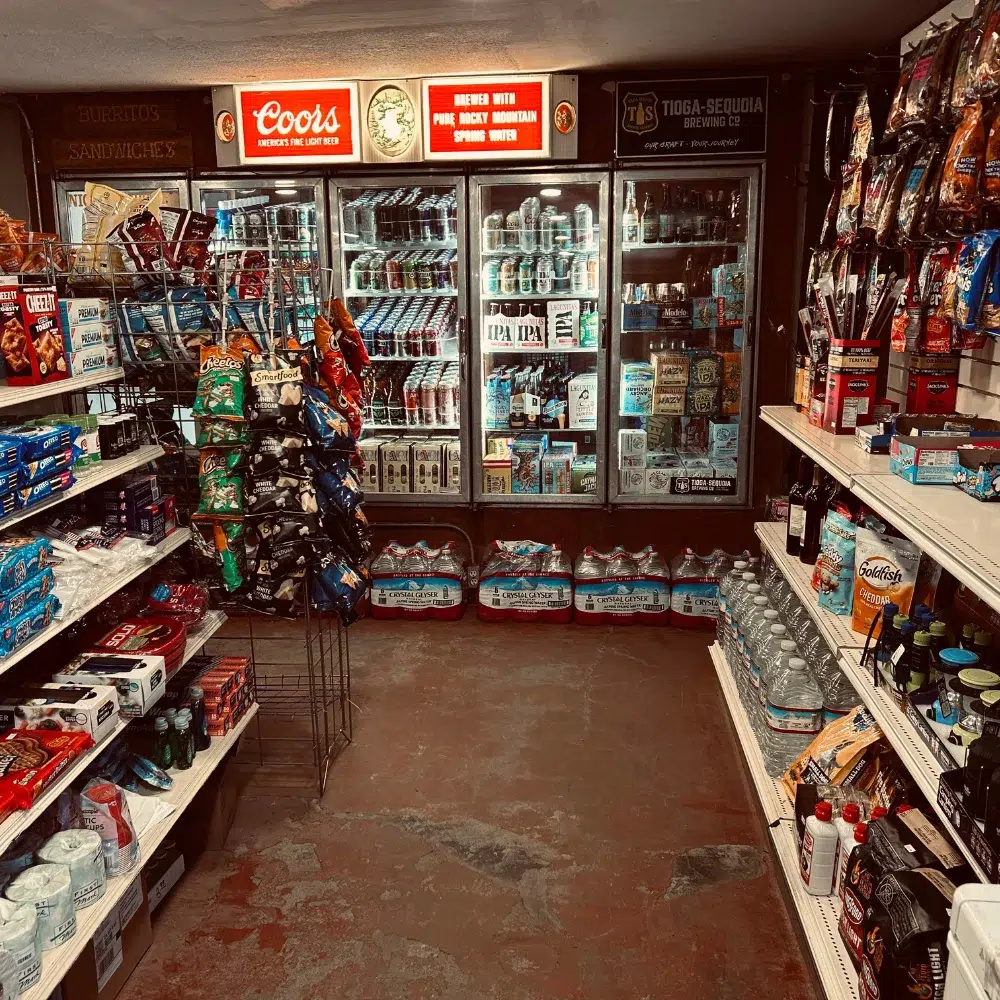
Restock at the General Store
Your mailed resupply package doesn’t have to cover every single thing you’ll want while you’re here. The Mono Hot Springs General Store carries food, drinks, ice, camping needs, fishing supplies, and other basics, including milk, fruit, vegetables, frozen foods, drinks, and snacks.
For backpackers, the General Store can be useful for:
- Adding fresh food to what you mailed ahead
- Picking up extra snacks or drinks
- Replacing something you forgot
- Adding a few items before your next resupply
- Picking up camping or fishing supplies while you’re here
In a larger trail town or nearby town, hikers may be able to buy food at a supermarket, local grocery store, small grocery store, gas station, or other businesses. Some stops, such as Tuolumne Meadows, also offer groceries, charging outlets, and basic camping supplies, while Mono Hot Springs works best when you mail the main items you know you’ll need and use the General Store to round out your supplies.
If you have specific backpacking meals, dietary needs, favorite brands, or exact quantities you’ll need for the next part of your trip, include those in your mailed package rather than assuming every item will be available when you arrive.
Things to Do at and Near Mono Hot Springs
If you’ve built a little extra time into your itinerary, there’s plenty to do around Mono Hot Springs besides resupplying.
Fishing is a big part of life in this part of the High Sierra, with the San Joaquin River, Edison Lake, Florence Lake, and nearby creeks and alpine lakes giving you plenty of places to cast a line. You can also spend time boating or paddling on the lakes, explore nearby hiking trails, or find a quiet spot along the river to relax.

Around Mono Hot Springs, you can also:
Go fishing in the river, lakes, and nearby mountain waters
Spend time at Edison Lake or Florence Lake
Get out on the water by boat or paddlecraft
Explore nearby hiking trails and wilderness areas
Sit down for a meal at Mono’s River Rock Cafe
Browse the General Store for food, drinks, fishing supplies, and other basics
If you’ve planned a rest day or an overnight stop, explore our things to do at Mono Hot Springs page for even more ideas.
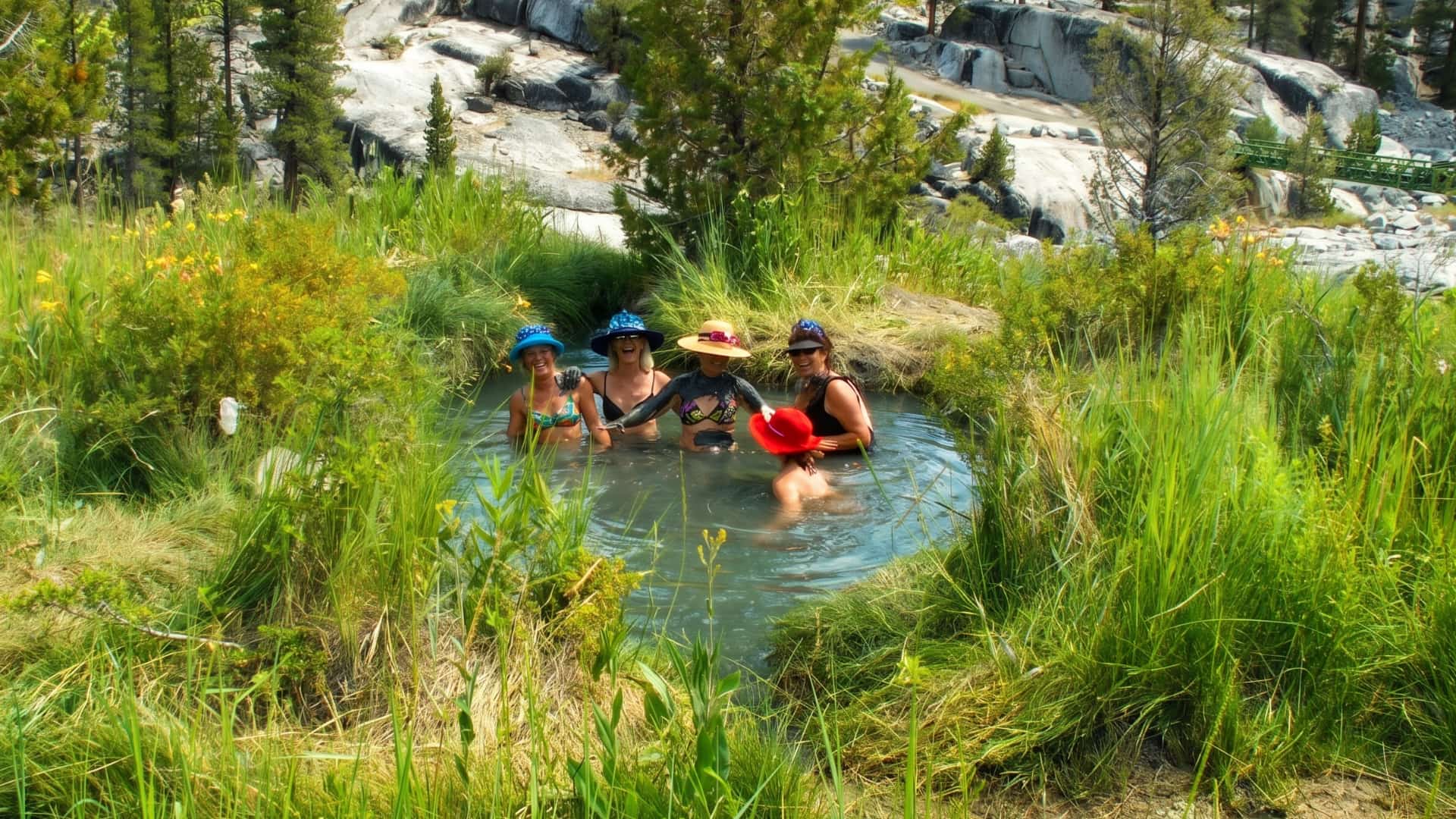
Soak in the Hot Springs
One of the best parts about stopping at Mono Hot Springs is getting to enjoy the hot springs while you’re here. After several days on the trail, you don’t have to just pick up your resupply package and head straight back into the mountains.
There are several natural mineral pools to explore, including Old Pedro, one of the hottest and best-known pools, Little Eden, a larger pool that’s often closer to swimming temperature, and Rose Garden, a smaller, cooler spot nearby.
You can also stop by our bathhouse, where natural hot mineral water is piped into private soaking tubs, showers, and the outdoor mineral spa. It’s a chance to soak, clean up, rest tired legs, and enjoy one of the things Mono Hot Springs has been known for for generations before heading back to the trail.
Staying Overnight at Mono Hot Springs
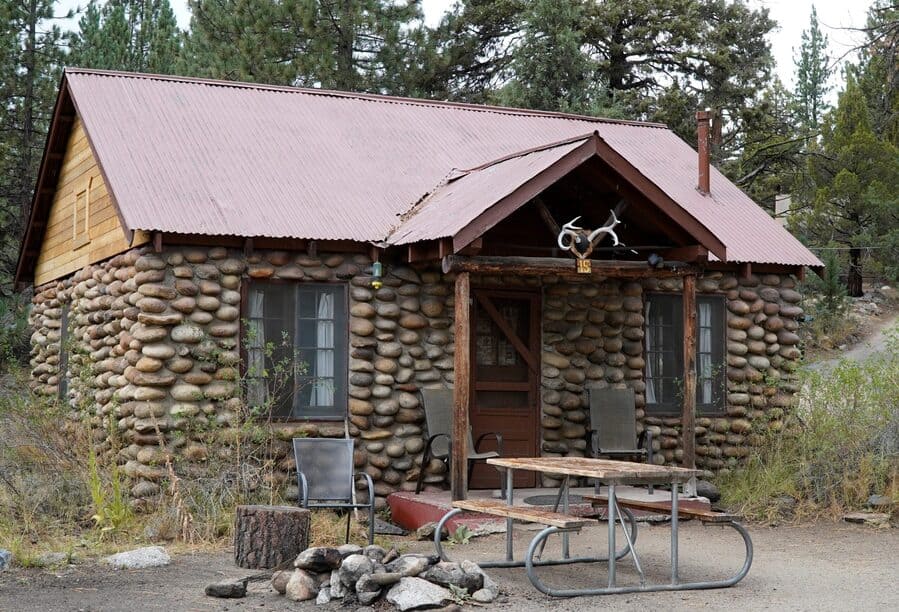
If your itinerary has room for a night off the trail, you can stay right here at Mono Hot Springs.
Our historic cabins give you a comfortable place to rest in the middle of the High Sierra, while our tent cabins offer a more rustic option with beds, raised wooden platforms, and access to the resort bathhouse and hot mineral spa.
An overnight stay gives you more time to eat, soak, clean up, organize your pack, enjoy hot meals, and rest before continuing the next part of your trip. For some hikers, it also works well as a full resupply, especially since package-holding fees at other stops can add up, like Red’s Meadow at $40, Vermilion Valley Resort at $40, and Muir Trail Ranch at $115.
Plan Your High Sierra Resupply Stop
A good resupply plan starts with knowing how many days you expect to hike between stops. For many southbound hikers, that means mapping key John Muir Trail resupply points from happy isles before deciding what to mail and what to buy.
Before your trip, think about:
How you’ll reach Mono Hot Springs from your route.
Your mileage before and after your stop.
How many days of food you’ll need afterward.
Where your next resupply will be. (For example, Tuolumne Meadows 23 miles, Red’s Meadow 60, Vermilion Valley Resort 88, Muir Trail Ranch 106, and the Kearsarge Pass Trail junction around Mile 180 from Happy Isles Trailhead).
What you want to mail ahead. The Tuolumne Meadows Post Office can handle mail drops, and the seasonal store offers food and basic supplies. That stop often feels like an early psychological boost on a southbound hike. Muir trail ranch is mainly used for pre-packed food buckets mailed by hikers.
What you may be able to pick up at the General Store.
Current trail, ferry, road, snow, and wildfire conditions.
For PCT hikers, these factors can shape a longer PCT resupply strategy. JMT hikers and other High Sierra backpackers can use the same approach to decide where mailing boxes ahead makes sense and where they may prefer to buy food. There’s no single resupply plan that works for every hiker, so build yours around your route, pace, food preferences, and available resupply options.
Because Mono Hot Springs is seasonal, check current road, trail, ferry, wildfire, and snow conditions before your trip, especially early or late in the season, and mail your resupply package early enough to arrive before your expected pickup date.
You can also give us a call at 559 325 1710 if you have questions about current resort or Post Office availability, mailing resupply packages, Post Office hours, or picking up your box.If you’re still planning your route, explore our hiking near Mono Hot Springs page for more information about nearby trails and wilderness access. You can also learn more about Edison Lake and Florence Lake or browse things to do at Mono Hot Springs if you’re planning to spend a little more time here.