
John Muir Trail Near Mono Hot Springs: Resupply Guide
If your John Muir Trail route brings you through this part of the Sierra, Mono Hot Springs can be a useful place to pick up supplies, grab a meal, and take a break before heading back to the trail.
Located near Lake Edison, Florence Lake, and the surrounding John Muir Wilderness, Mono Hot Springs has long been a stop for backpackers traveling through the area. You can mail food and trail supplies ahead through General Delivery, then pick up your package at the post office inside the General Store.
Some hikers stop just long enough to pick up their resupply and continue on. Others stay for a meal, soak in the hot springs, spend the night in a cabin, and give their legs some time to recover before starting the next section of the hike.

John Muir Trail Resupply at a Glance
Here are the main things to know before adding this stop to your JMT resupply plan:
Mail food and trail supplies ahead to the Mono Hot Springs Post Office through USPS General Delivery.
Reach the area using routes connected to Lake Edison, Florence Lake, or Bear Creek.
Pick up groceries and basic supplies at the General Store if you need to fill in a few gaps.
Add a meal, soak, shower, or overnight stay if you want to turn your resupply into a rest stop.
Check current resort dates, ferry schedules, trail conditions, and seasonal access before your hike.
How to Send a JMT Resupply Package
If you’re using Mono Hot Springs as a JMT resupply stop, you can mail your food and trail supplies ahead and pick them up when you arrive. Packages are sent through USPS General Delivery to the Mono Hot Springs Post Office, located inside the General Store.
Address your package as follows:
Your Name
General Delivery
Mono Hot Springs, CA 93642
HOLD UNTIL [DATE]
Clearly mark your package for General Delivery handling with “HOLD UNTIL [DATE]” using the approximate date you expect to arrive. Mono Hot Springs can accept food packages through the post office and General Store, unlike ranger-station limits hikers may run into elsewhere. Give your package plenty of time to reach Mono Hot Springs before you do, and leave some flexibility in your schedule in case trail conditions, creek crossings, or your daily mileage put you a day or two ahead of or behind your original plan.
For longer sections of the JMT, mailing your main food and trail supplies ahead can give you more certainty about what you’ll have when you arrive. The General Store also carries groceries, snacks, drinks, and other basics if you need to pick up a few additional items during your stop.
Getting Here From the John Muir Trail
Mono Hot Springs can be reached from the John Muir Trail through several nearby access points. Hikers have traditionally used three general approaches, depending on their route, timing, and current trail conditions, and these access points can work for longer backpacking routes or shorter day hikes from the John Muir Trail corridor.

Lake Edison
Lake Edison is one of the best-known access points in this part of the Sierra. The JMT and Pacific Crest Trail share the same corridor through much of the area, passing near the upper end of the lake. Some hikers compare this access with Vermilion Valley Resort, which is about 12 miles round-trip for resupply.
When ferry service is operating, hikers can use it to shorten the trip across Lake Edison. The ferry landing is roughly a mile from the JMT/PCT corridor. After crossing the lake, you’ll still need to make the connection from the Edison Lake area to Mono Hot Springs. Ferry schedules and lake conditions can change throughout the season, so check current service as you plan your route.
Florence Lake
Florence Lake is another popular route between the John Muir Trail and Mono Hot Springs. Hikers can follow connecting trails toward Florence Lake and, when ferry service is operating, take the ferry across the lake to the road-access side.
From there, you can continue by road to Mono Hot Springs. Backpackers can often catch a ride from Florence Lake, so check the current ferry schedule and transportation options as you plan your resupply stop.


Bear Creek
The Bear Creek Trail is another backcountry route between the JMT and Mono Hot Springs, and it’s a hike of about 6–7 miles from Bear Lake before hikers continue back toward the Mono Hot Springs area.
Hikers can leave the JMT and follow the Bear Creek drainage toward the Mono Hot Springs area, making this a more hiking-focused option than routes that involve a ferry or road transportation.
Use an up-to-date trail map and check current wilderness conditions before choosing this route. Creek crossings, lingering snow, wildfire conditions, and trail closures can all affect travel through this part of the Sierra.
A note for all routes: Cell service can be limited in this part of the Sierra, so save any maps, ferry schedules, and route information you’ll need before heading out. It’s also a good idea to leave some flexibility in your plans in case trail conditions or ferry schedules change.
Planning Your JMT Resupply Stops
The John Muir Trail stretches about 211 miles through California’s Sierra Nevada mountains, from Yosemite Valley to the summit of Mount Whitney, and for the classic southbound route, the trail begins in Yosemite National Park, so most thru-hikers will need more than one resupply stop along the way. A full hike commonly takes around two to three weeks, depending on your pace, route, and itinerary, and the route crosses six major mountain passes above 11,000 feet, so it takes serious physical conditioning and preparation. Individual sections can involve thousands of feet of climbing, and the full JMT includes roughly 47,000 feet of elevation gain.
Southbound hikers typically begin in Yosemite National Park and continue through the High Sierra toward Mount Whitney, while northbound hikers may start from Whitney Portal, or use Cottonwood Pass Trailhead from Horseshoe Meadow as an alternate northbound route that connects with the PCT before joining the JMT toward Yosemite. The best hiking season for the JMT is generally July through September, and most people start in July or August. Along the way, the trail passes through Yosemite, Sequoia, and Kings Canyon National Parks and includes roughly 47,000 feet of elevation gain. Mammoth Lakes is also a common logistics and resupply point when mapping out a full JMT itinerary, and some hikers also plan around the tuolumne meadows post office farther north.
When planning your resupply stops, consider:

Your hiking direction
Northbound and southbound itineraries will put resupply points at different stages of your trip.
Your daily mileage
Your pace will determine how many days of food you need between stops.
How much food you want to carry
More frequent resupplies can help keep pack weight down.
Your expected arrival dates
Build in some flexibility in case you reach a stop earlier or later than planned. It also helps to match permit timing to your trip entry date.*
Ferry and seasonal schedules
Some access options may only operate during certain times of the season.**
Current trail conditions
Snow, creek crossings, closures, and other conditions can affect your timing and route.***
*Yosemite Wilderness Permit reservations open 168 days in advance, and 60% of Yosemite permits can be reserved ahead of time. Whitney Portal permits use a lottery system, with applications typically accepted from February 1 to March 1 and results posted March 15. Cottonwood Pass permits can be applied for online 6 months in advance.
**Some access options may only operate during certain times of the season, and around Mono Hot Springs access routes, conditions are usually best from late May through October, though schedules still vary by lake access, season, and when Kaiser Pass Road is open.
***In the early season, snow may linger at higher elevations until late June, and early-summer creek crossings can be challenging when water is running swift. Terrain on many nearby JMT sections is rocky with steep elevation gains, and hikes in this country can easily add up to thousands of feet of climbing.
Other resupply points along or near the JMT may include Muir Trail Ranch, Red’s Meadow, and the Tuolumne Meadows area. Spacing out your stops can help keep food weight manageable while making sure you have what you need for each section of the trail.
Why Stop at Mono Hot Springs During Your JMT Hike?
Mono Hot Springs can be more than a place to pick up your resupply package. If you have room in your itinerary, you can grab a meal, soak, clean up, spend the night, and give your legs a break before heading back into the High Sierra.
We’re tucked along the San Joaquin River in the Sierra National Forest, surrounded by mountains, lakes, and wilderness. You can keep your stop short and get back on the trail, or stay for a few hours or overnight and enjoy a little time off your feet.
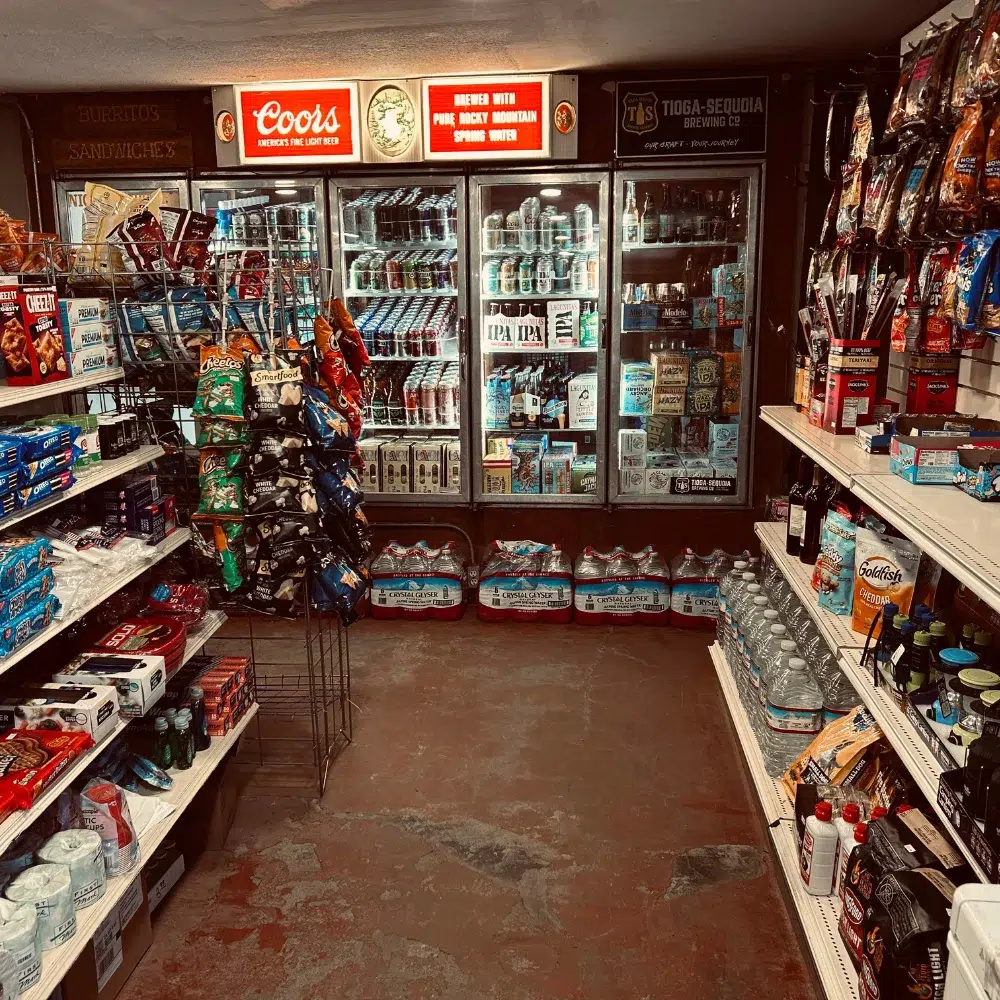
Pick Up Supplies at Our General Store
Our General Store houses the post office, so you can pick up your mailed resupply and take care of a few other basics at the same time.
We carry groceries and staples, including milk, fruit, vegetables, frozen foods, drinks, candy, and other supplies for visitors and campers. Stop in for something fresh or pick up a few additional items before heading back out.
For a longer JMT section, mailing your main trail food ahead can give you more certainty about what you’ll have when you arrive. You can then use the General Store to add anything else you need for the next part of your hike. Water filtration is still necessary for natural water sources along the trail.
Before heading back into the wilderness, you can also take some time to reorganize your food and make sure everything, including scented items, fits properly inside your approved bear canister.
Grab a Hot Meal
After several days on the trail, a hot meal and some time off your feet can feel pretty good. When our restaurant is open, stop by for something to eat before repacking your food and starting the next section of your hike.


Soak in the Hot Springs
Of course, one of the best reasons to spend a little extra time at Mono Hot Springs is the chance to soak after hiking in.
Our natural mineral pools sit near the San Joaquin River, and we also have a mineral bathhouse and spa with private soaking tubs and showers. If you’re using the pools or spending time by the river during the day, bring sun protection since the mountain sun can be strong.
You don’t have to turn your resupply into a full rest day to enjoy them. Even a shorter stop can give you time for a meal, shower, and soak before heading back toward the trail.
Stay Overnight or Take a Rest Day
If your schedule allows, you can also turn your resupply stop into a zero day or shorter mileage day.
We have historic cabins, rustic cabins, and tent cabins if you’d like a night out of your tent. There’s also a Forest Service campground across the river. Staying overnight gives you more time to eat, shower, soak, reorganize your food, and rest before beginning the next section of your hike.
Our cabins can fill during the summer, so we recommend making reservations ahead if an overnight stay is an important part of your JMT plans.


Spend a Little More Time With Us
If you have extra time before returning to the trail, there’s plenty to do without turning your resupply stop into a major side trip.
Take one of the nearby hiking trails, go trout fishing, or spend a little more time soaking in the mineral pools. A simple walk to Doris Lake is one of the easiest options here, with a 1-mile easy hike from Mono Hot Springs that works well if you want to swim, relax, and enjoy stunning views of this part of the Sierra before heading back out. Jackass Meadows also offers easy walking at about 7,200 feet. Corbett Lake is about a 3-mile hike from the trailhead near the High Sierra Ranger Station, with Givens and Cunningham Lakes farther into the surrounding backcountry.
The Dutch, Hidden, and Crater Lakes hike is roughly 7 miles round trip, with waterfalls and more rugged terrain along the way. After several days in the backcountry, it’s a chance to slow down and head into your next stretch of trail feeling refreshed. In summer, lakes and meadows can have heavy mosquitoes, with activity often peaking from early summer through mid-August. If you’re here later in the season, fall brings cooler air and fewer people on the trails.
Before You Add This Stop to Your JMT Resupply Plan
A little planning ahead can make your resupply stop much easier, especially since your route may involve backcountry trails, a ferry, or transportation from one of the nearby lakes.
Before your trip, make sure you know how you plan to reach Mono Hot Springs and roughly when you expect to arrive. It’s also a good idea to check current operating schedules and trail conditions close to your departure date, since access can change throughout the season.
Before your hike, check:
Your planned route between the JMT and Mono Hot Springs
Current trail and creek crossing conditions
Lake Edison or Florence Lake ferry schedules if you plan to use them
Your expected package arrival and pickup date
Current resort operating dates
Cabin availability if you want to stay overnight
Food storage and bear canister requirements
Your wilderness permit and trailhead requirements
Transportation or transfer logistics that affect your route
Snow, wildfire, and trail closure information
Again, cell service can be limited in this part of the Sierra, so save any maps, ferry schedules, and route information you’ll need before heading out. Leave some flexibility in your plans as well in case conditions or schedules change.